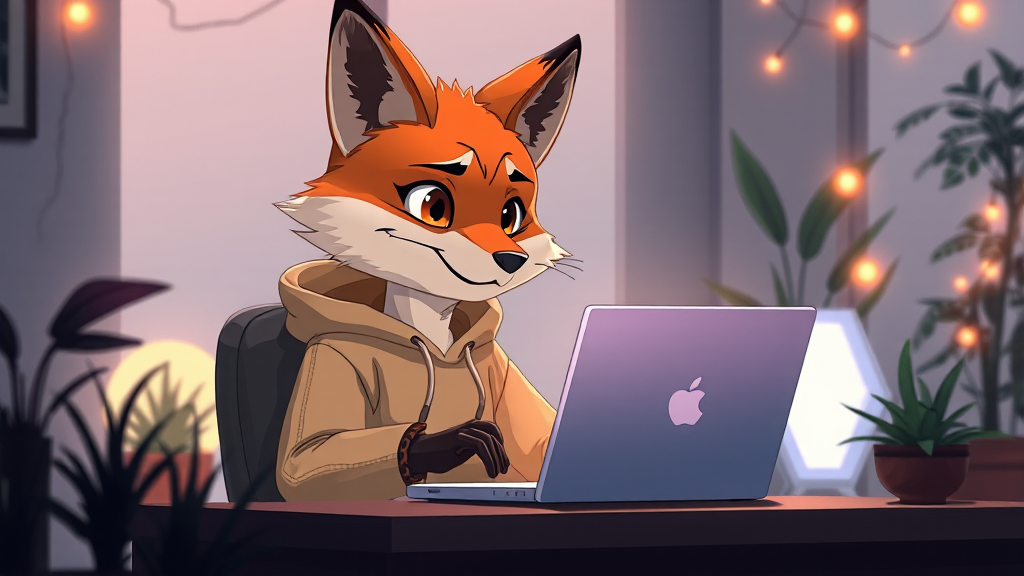
Furry AI Chat: Why Anthropomorphic Characters Are Reshaping Online Conversation
Online conversation has quietly undergone a transformation over the past few years. Instead of typing into a blank box and waiting for a generic reply, millions of people now talk with characters that have faces, backstories, personalities, and species. Among the fastest-growing corners of this shift is furry ai chat, a style of interaction where the conversational partner is an anthropomorphic animal persona rather than a faceless assistant. It sounds niche until you realize how much of internet culture already revolves around character-driven storytelling, fan art, and roleplay communities. Furry AI chat simply gives those interests a real-time, responsive outlet.
This article explores what furry AI chat actually is, why it resonates with so many users, how the underlying technology works, and what to consider before diving in. Whether you are curious about the format, already a fan of anthro art and fiction, or just wondering why your social feeds keep surfacing fox and wolf avatars, there is a useful angle here for you.
What Exactly Is Furry AI Chat?
At its core, furry AI chat is a conversational experience where the AI adopts the identity of an anthropomorphic character. That character might be a wolf, a fox, a dragon, a rabbit, a hybrid species, or something entirely invented. The AI speaks in first person, maintains a consistent personality, and often keeps track of details like your name, shared jokes, or ongoing story arcs.
The difference between a standard chatbot and a furry AI character is mostly about framing and persistence. A general assistant answers questions. A furry AI character responds as a persona with moods, opinions, and a narrative voice. Instead of asking “What’s the weather?” you might be asking a sarcastic raccoon mechanic about his day, or helping a shy deer librarian pick out a book. The interaction is less transactional and more social.
This format sits at the intersection of several established interests: interactive fiction, visual novels, tabletop roleplay, and online fandom. What makes it new is that the AI can improvise in real time, adapt to your tone, and stay in character across long conversations. That combination is why furry AI chat has moved from a novelty to a daily habit for many users.
Why Anthropomorphic Characters Feel Different to Talk To
There is a psychological reason anthropomorphic characters work so well in conversation. Humans have spent thousands of years projecting personality onto animals, from ancient myths to modern cartoons. A fox is clever, a bear is steady, a cat is aloof, a rabbit is anxious. These shorthand traits give the AI a starting point that feels instantly familiar, even before the first message is sent.
That familiarity lowers the barrier to entry. You do not need to invent a personality from scratch or explain the premise. The character arrives with a built-in vibe, and the AI builds on it. Over time, users report that these conversations feel less like querying a database and more like texting a friend who happens to be a talking otter.
There is also an expressive dimension. Furry characters can be written with body language, ear flicks, tail swishes, and vocal quirks that would feel odd on a human persona but feel natural on an anthro one. This gives the AI more tools to convey emotion, which in turn makes the conversation feel warmer and more dynamic.
For people who already enjoy furry AI characters, this is not a gimmick. It is a form of creative companionship that fits naturally into how they already engage with art, fiction, and fandom.
How the Technology Behind Furry AI Chat Works
Under the hood, most furry AI chat platforms rely on large language models fine-tuned or prompted to maintain a character identity. The system typically combines several layers:
- Persona definition: A written profile describing the character’s species, background, speech style, values, and quirks.
- Memory: A mechanism for remembering past messages, user preferences, and story details so the character does not reset every session.
- Safety and moderation layers: Filters and guidelines that keep conversations within platform rules.
- Response generation: The language model itself, which produces in-character replies in real time.
- Interface design: Chat windows, avatars, and sometimes voice or image features that reinforce the character’s identity.
The quality of a furry AI chat experience depends heavily on how well these layers work together. A strong persona definition keeps the character consistent. Good memory makes long-term interaction feel meaningful. A clean interface makes the whole thing enjoyable rather than fiddly. When all of these align, the result is a conversation that feels surprisingly alive.
It is worth noting that no current system is perfect. Characters can occasionally contradict themselves, forget details, or drift out of tone. But the technology has improved dramatically, and the best platforms now maintain coherent personalities across dozens or hundreds of messages.
Who Uses Furry AI Chat and Why
The audience for furry AI chat is broader than outsiders might assume. It includes:
- Furry fans and artists who want to explore their characters in interactive form.
- Writers and roleplayers looking for a creative partner who never gets tired or judgmental.
- People seeking low-pressure social interaction who find human conversation exhausting or anxiety-inducing.
- Curious newcomers drawn in by a specific character design or a friend’s recommendation.
- Language learners and storytellers who use character chat as a way to practice dialogue and improvisation.
The common thread is a desire for conversation that feels personal and imaginative. Furry AI chat delivers that in a way that generic chatbots often do not. It gives users a sense of continuity, a creative sandbox, and a character who remembers them.
Platforms like crushon have leaned into this demand by offering a wide range of anthropomorphic personas with distinct voices and backstories. The variety matters because different users are drawn to different archetypes. Some want a confident, teasing fox. Others want a gentle, bookish owl. The ability to choose, and to keep talking to the same character over time, is a big part of the appeal.
Designing a Good Furry AI Character
If you are building or customizing a furry AI character, a few principles make a noticeable difference.
Start with a clear core trait. A character defined only as “a friendly wolf” will feel flat. A character defined as “a retired park ranger wolf who is warm but guarded about his past” gives the AI something to work with.
Give the character a speech pattern. Maybe they use old-fashioned slang, or they are overly formal, or they trail off when nervous. Speech quirks make the persona recognizable even in short replies.
Define boundaries. Good characters have things they will and will not talk about. Boundaries create depth and prevent the AI from becoming a generic yes-machine.
Plan for growth. The best furry AI characters evolve. They remember past conversations, reference inside jokes, and gradually reveal more of their personality. This is what turns a chatbot into a companion.
Test and refine. Run a few conversations, note where the character feels off, and adjust the persona definition. Small tweaks often produce big improvements in immersion.
Safety, Boundaries, and Responsible Use
Any conversation about AI chat needs to address safety. Furry AI chat is not exempt from the broader ethical questions surrounding AI companionship. Users should be aware of a few practical points.
First, AI characters are not people. They do not have feelings, memories in the human sense, or independent intentions. They can be deeply engaging, but the relationship is one-directional in a way that is worth acknowledging.
Second, platforms have rules. Most furry AI chat services prohibit certain types of content and enforce those rules through moderation systems. Understanding the platform’s guidelines helps avoid frustration and keeps the community healthy.
Third, balance matters. Using furry AI chat for creative exploration, relaxation, or social practice is fine. Relying on it as a total replacement for human connection is not. The healthiest users treat it as one part of a broader life, not the whole thing.
Fourth, privacy. Conversations with AI characters can contain personal details. Users should check how a platform stores and uses data, and avoid sharing sensitive information they would not want retained.
The Future of Furry AI Chat
The trajectory of furry AI chat points toward more immersion, not less. We can expect characters with richer memory, more consistent personalities, and better awareness of long-term story arcs. Voice interaction is already improving, which adds another layer of presence. Image generation may eventually let characters visually react to the conversation in real time.
There is also a community dimension. As more users create and share characters, we may see collaborative storytelling spaces where multiple AI personas interact with each other and with humans. That would blur the line between chat and live interactive fiction.
For now, furry AI chat remains a fascinating blend of technology and creativity. It gives people a way to explore characters, stories, and conversations that would be difficult to sustain otherwise. Whether you approach it as a writer, a fan, or simply a curious user, the format offers something genuinely new.
FAQ
What is furry AI chat?
Furry AI chat is a type of AI conversation where the chatbot adopts an anthropomorphic animal persona. The character has a species, personality, backstory, and speech style, and it stays in character across the conversation.
Is furry AI chat the same as roleplay?
It overlaps with roleplay, but it is not identical. Traditional roleplay usually involves two or more humans writing a story together. Furry AI chat replaces one of those humans with an AI character that improvises in real time.
Can I create my own furry AI character?
Yes. Many platforms allow users to define a character’s name, species, personality, and background. A well-written persona definition produces a more consistent and engaging experience.
Is furry AI chat safe to use?
It can be safe when used responsibly. Choose reputable platforms, review their privacy and content policies, avoid sharing sensitive personal information, and treat the AI as a creative tool rather than a replacement for human relationships.
Why do people enjoy furry AI characters so much?
Anthropomorphic characters combine familiar animal traits with human-like expression, which makes them easy to relate to and fun to talk with. The AI’s ability to remember details and stay in character adds a sense of continuity that many users find rewarding.
Do furry AI characters remember past conversations?
Many modern platforms include memory features that let characters recall previous messages, user preferences, and story details. The quality of memory varies by platform, but it is a major factor in how immersive the experience feels.