Light, Nature and Sleep: Timing Your Day Outdoors
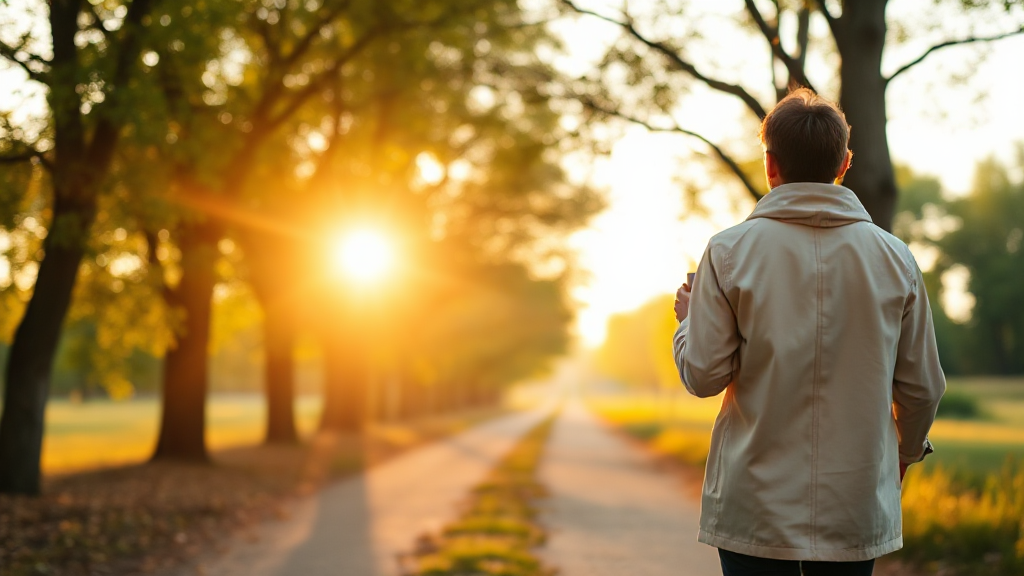
Marcus had worked nights for six years before he tried something almost embarrassingly simple. Instead of reaching for coffee the moment he got home at 7 a.m., he started walking around the block first, face turned toward the sunrise, mug still empty in his hand. Within three weeks, his “second wind” at noon had softened, his 2 p.m. crash had moved earlier and become less brutal, and he was falling asleep closer to 9 a.m. instead of staring at the ceiling until 11. His sleep was not cured. But it was finally shaped by something other than caffeine and willpower.
That shift is what sleep clinicians call circadian entrainment: the process of syncing your internal clock to the external world. It is one of the most reliable levers we have for Health, sleep quality and daytime alertness, and it costs nothing. The catch is that timing matters more than intensity. A ten-minute walk at the right hour can do more for your sleep than an hour of exercise at the wrong one.
Your Body Clock Is Set by Light, Not by Discipline
Deep in the brain sits a cluster of about 20,000 neurons called the suprachiasmatic nucleus. It runs on a roughly 24-hour cycle, but it is not a perfect clock. Left alone in dim light, most people drift later and later, which is why a week of dark winter mornings or a run of night shifts can leave you feeling permanently jet-lagged.
The fix is a signal called light entrainment. Specialized cells in the retina — separate from the rods and cones you use to see — respond to bright light, especially in the blue-rich part of the spectrum, and send that information straight to the clock. Morning light tells the clock “day has started, hold your position.” Evening light tells it “the day is not over yet, delay sleep.” When those signals arrive at the wrong times, sleep timing drifts.
This is why outdoor light is so different from indoor light. A well-lit living room might deliver 200 to 500 lux. An overcast morning outdoors can deliver 5,000 to 10,000 lux, and a sunny day can exceed 100,000 lux. Even sitting near a bright window is a poor substitute for stepping outside, because window glass filters some of the wavelengths your clock cares about most.
A Daily Light-Timing Table for Real Schedules
There is no single perfect schedule, but the general shape is consistent: bright light early, dim light late, and as much natural daylight in between as your day allows. The table below is a practical starting point, not a prescription. Adjust it to your shift pattern and your body’s response.
Morning (within 30–60 minutes of waking): Aim for 10–30 minutes of outdoor light, ideally without sunglasses. If you wake before sunrise, use a bright light box at 10,000 lux for 20–30 minutes. This is the anchor that sets everything else.
Midday (roughly 11 a.m. to 2 p.m.): Get outside again if you can, even briefly. Midday light reinforces the signal and helps stabilize mood and alertness. A short walk, a coffee outside, or eating lunch on a bench all count.
Late afternoon (3 to 5 p.m.): Moderate light is fine. This window is often the best time for exercise if you are trying to advance your sleep timing, since it does not usually push sleep later the way late-evening workouts can.
Evening (2–3 hours before bed): Dim your environment. Lower overhead lights, switch to lamps, and reduce screen brightness. Avoid bright overhead light if you can, especially if you already struggle to fall asleep.
Night (bedtime and overnight): Keep the bedroom dark and cool. If you wake to use the bathroom, use a dim red or amber nightlight rather than a bright white one. If you work nights, wear blue-light-blocking glasses on the commute home and sleep in a room with blackout curtains.
For shift workers, the logic flips: the goal is to protect a consistent “biological night” as much as possible. If you work a rotating schedule, try to keep your sleep window anchored to the same clock hours on your days off, and use bright light at the start of your shift rather than at the end.
Why Outdoor Time Beats Indoor Light for Sleep
Light is the primary signal, but it is not the only one. Time outdoors also brings movement, temperature variation, and a change of visual scene, all of which support sleep in ways a light box cannot fully replicate. Walking outside in the morning raises your core temperature slightly and then lets it fall later in the day, and that evening drop is one of the natural triggers for sleepiness.
There is also the matter of what you are not doing indoors. If your morning routine is scrolling in bed under a dim lamp, you are delivering weak, poorly timed light and reinforcing a sedentary start. If it is a walk around the block, you are delivering a strong signal and a bit of exercise. The behavioral package matters. Nature
Nature adds another layer. Time in green space is consistently associated with lower stress markers, better mood and improved sleep quality in observational studies, though researchers are careful to note that the effect sizes are modest and the mechanisms are still debated. What is clear is that outdoor time is a low-risk intervention with a plausible pathway: less stress, more light, more movement, better sleep.
If you want to build a routine that sticks, pairing it with something you already enjoy helps. Many people find that tending a few pots on a balcony or a small Gardening patch gives them a reason to be outside at the same time every morning, which is exactly what the clock needs. The plants are not the treatment. The timing is.
What the Evidence Actually Supports — and What It Does Not
Light and circadian science is one of the better-supported areas of sleep research. Morning bright light has been shown in randomized trials to advance sleep timing, improve mood in seasonal affective patterns, and reduce daytime sleepiness in shift workers. Evening light exposure, especially from screens held close to the face, is reliably associated with delayed sleep onset, though the size of the effect varies a lot between people.
What the evidence does not support is the idea that light alone fixes insomnia. Chronic insomnia usually involves a mix of factors: conditioned arousal, anxiety about sleep, irregular schedules, caffeine, alcohol, and sometimes underlying medical or mental health conditions. Light timing is a foundation, not a standalone cure. If you have been struggling for more than a few weeks, a clinician or a CBT-I (cognitive behavioral therapy for insomnia) program is a better next step than another supplement.
It is also worth being honest about individual variation. Some people are extreme morning types who feel best at 5 a.m.; others are night owls whose clocks run long. The same light schedule will not suit everyone, and forcing an owl into a lark’s routine can backfire. The goal is to shift your timing gradually, by 15 to 30 minutes at a time, and to notice how you feel rather than to hit a target.
Nature, too, deserves a measured claim. Being outdoors is not a substitute for medical care, and no amount of morning light will fix sleep apnea, thyroid problems, or depression on its own. Think of light and outdoor time as the base layer of a sleep routine, not the whole structure.
Practical Rules for Shift Workers and Insomniacs
If you work nights, the hardest part is protecting sleep during the day. Blackout curtains, an eye mask, and a cool room are not luxuries; they are the equivalent of morning light for a day sleeper. On the drive home, sunglasses or blue-light-blocking lenses reduce the signal that tells your brain it is time to be awake.
If you have trouble falling asleep, the most useful change is often the evening one: dimming lights earlier than feels natural. Many people keep the house bright until 10 p.m. and then wonder why 11 p.m. feels like 8 p.m. to their brain. Turning down the lights two hours before bed is a small habit with an outsized effect for some people.
If you wake too early, morning light is usually the wrong tool; you may need more evening light and a later bedtime to consolidate sleep. This is where a sleep diary and, ideally, a clinician’s input helps. Patterns matter more than any single night.
And if you are simply trying to feel better without a diagnosis, start with the cheapest experiment available: ten minutes outside before your first coffee, for two weeks. Track your sleep and your mood. Most people learn something useful about their own clock within that window.
Frequently Asked Questions
How long do I need to be outside in the morning to affect my sleep?
For most people, 10 to 30 minutes of outdoor light within an hour of waking is enough to send a strong signal to the circadian clock. On bright days, less time may suffice; on dark winter mornings, you may need longer or a 10,000-lux light box. Consistency matters more than duration.
Can I get the same effect from a bright window or a light box?
A light box at 10,000 lux can substitute for outdoor light when you cannot get outside, and it is a standard tool in circadian research. A bright window is a weaker substitute because glass filters some of the relevant wavelengths and indoor light levels are usually far lower than outdoor ones.
Does evening screen time really ruin my sleep?
It can delay sleep for some people, especially when the screen is close to the face and the content is stimulating. The effect varies widely. Dimming screens, using night mode, and putting devices away an hour before bed are reasonable precautions, but they are not a substitute for a consistent sleep schedule.
Is morning light useful for shift workers who sleep during the day?
Yes, but the timing changes. A night worker’s “morning” is the end of their shift, so the goal is often to limit bright light on the commute home and protect daytime darkness. Bright light at the start of the shift can help with alertness.
When should I see a doctor about sleep problems?
If sleep problems last more than a few weeks, interfere with work or mood, or come with loud snoring, gasping, or excessive daytime sleepiness, see a clinician. Light timing is helpful, but it does not replace evaluation for conditions like sleep apnea or chronic insomnia.
Sleep is not a switch you flip with discipline. It is a rhythm you nudge, day after day, with light, darkness, movement and time outside. The walk before coffee is not a cure. It is a signal — and for many people, it is the one their clock has been waiting for.